Vancouver Cancels the Villages Plan — What It Means for Small-Site Development
Charles Song
5 min read
Governmental Plan
Introduction
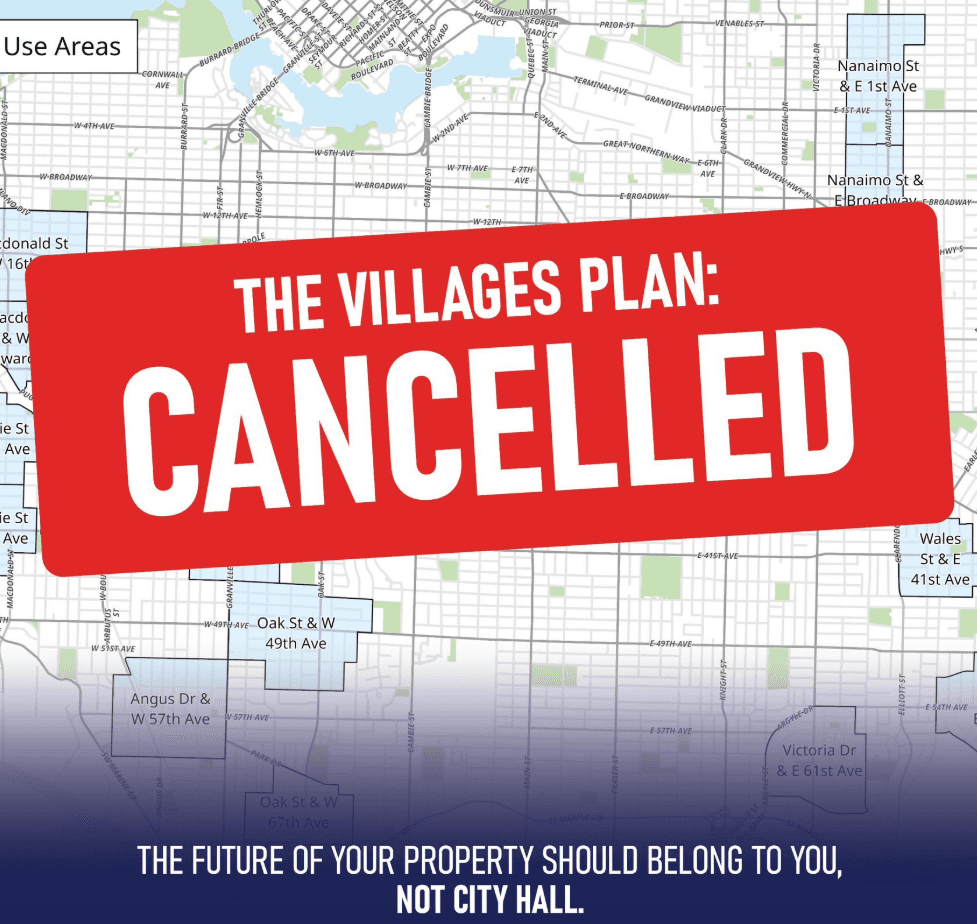
On July 28, 2026, Vancouver City Council voted 10–1 to cancel the Villages Plan, ending a two-year program that would have upzoned roughly 13,000 lots across 17 neighbourhoods. Council did, however, endorse single egress stair reform. We look at what changes — and what doesn't.
Introduction
On July 28, 2026, Vancouver City Council voted 10–1 to cancel the Villages Plan, ending a two-year program that would have upzoned roughly 13,000 lots across 17 neighbourhoods. Council did, however, endorse single egress stair reform. We look at what changes — and what doesn't.
Villages Plan Scrapped: Vancouver Returns to Site-by-Site Rezoning Council Rejects Villages Plan, Adopts Single Egress Stairs
Villages Plan Scrapped: Vancouver Returns to Site-by-Site Rezoning Council Rejects Villages Plan, Adopts Single Egress Stairs
1. The Scale of the Problem
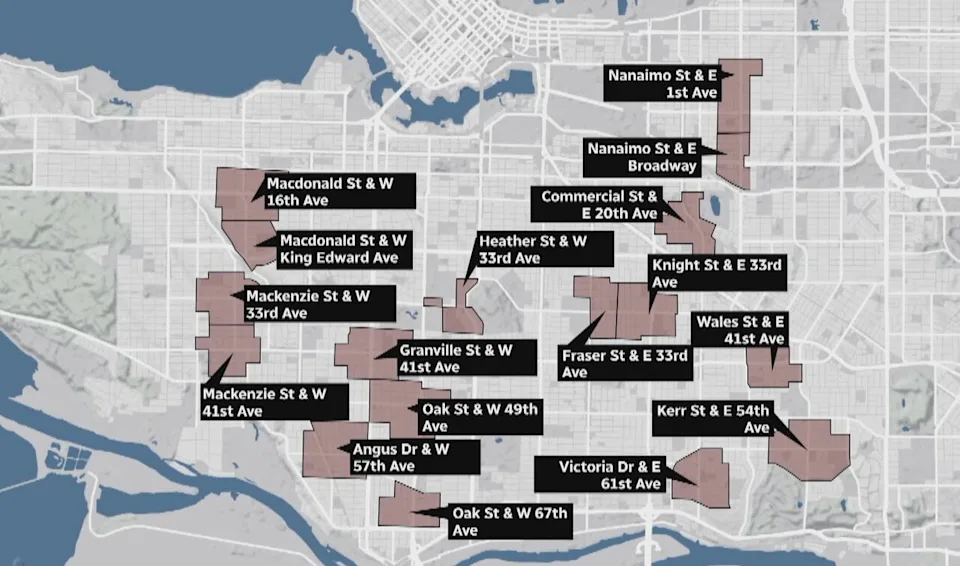
Vancouver City Council voted 10–1 on July 28, 2026 to cancel the Villages Plan, the city-initiated rezoning program that would have introduced low- and mid-rise density of up to eight storeys across 17 designated village areas, covering roughly 13,000 parcels citywide. Only OneCity Councillor Lucy Maloney voted in favour; the Mayor, all ABC councillors, and the Vote Vancouver, Green and COPE councillors voted against.
The decision followed a public hearing held over three days, with roughly 300 speakers and approximately 3,000 pieces of correspondence, overwhelmingly opposed. Opposition centred on neighbourhood character, infrastructure capacity, and tree canopy loss, while supporters argued the plan would have delivered new housing beyond the arterial corridors. The program had originally identified 26 village areas before being narrowed to 17 over 18 months of planning and engagement.
2. What this means in practice
Sites that were relying on the Villages Plan for future density are back to the existing framework — the Broadway Plan, Cambie Corridor, transit-oriented area legislation, multiplex policy, and site-specific rezoning. Projects that already hold an approved rezoning or an in-stream application are unaffected; the cancellation removes a prospective entitlement pathway, not existing ones. For owners who were holding land in anticipation of a village designation, the value case now has to be rebuilt on current zoning and provincial TOA requirements.
3. One reform survived
Council separated the mass-upzoning items from the balance of the package and endorsed the single egress stair provisions, along with tightening of Official Development Plan administrative tools. This is the piece with real design consequence: single-stair buildings unlock efficient floor plates on narrow and small lots, improve unit mix on constrained sites, and make family-sized units viable in configurations that were previously uneconomic under two-stair requirements.
1. The Scale of the Problem
Vancouver City Council voted 10–1 on July 28, 2026 to cancel the Villages Plan, the city-initiated rezoning program that would have introduced low- and mid-rise density of up to eight storeys across 17 designated village areas, covering roughly 13,000 parcels citywide. Only OneCity Councillor Lucy Maloney voted in favour; the Mayor, all ABC councillors, and the Vote Vancouver, Green and COPE councillors voted against.
The decision followed a public hearing held over three days, with roughly 300 speakers and approximately 3,000 pieces of correspondence, overwhelmingly opposed. Opposition centred on neighbourhood character, infrastructure capacity, and tree canopy loss, while supporters argued the plan would have delivered new housing beyond the arterial corridors. The program had originally identified 26 village areas before being narrowed to 17 over 18 months of planning and engagement.
2. What this means in practice
Sites that were relying on the Villages Plan for future density are back to the existing framework — the Broadway Plan, Cambie Corridor, transit-oriented area legislation, multiplex policy, and site-specific rezoning. Projects that already hold an approved rezoning or an in-stream application are unaffected; the cancellation removes a prospective entitlement pathway, not existing ones. For owners who were holding land in anticipation of a village designation, the value case now has to be rebuilt on current zoning and provincial TOA requirements.
3. One reform survived
Council separated the mass-upzoning items from the balance of the package and endorsed the single egress stair provisions, along with tightening of Official Development Plan administrative tools. This is the piece with real design consequence: single-stair buildings unlock efficient floor plates on narrow and small lots, improve unit mix on constrained sites, and make family-sized units viable in configurations that were previously uneconomic under two-stair requirements.
Conclusion
With the citywide upzoning route closed for now, feasibility on small and mid-size sites shifts back to design efficiency and delivery cost — precisely where single egress stairs, standardized typologies, and off-site construction methods make the difference. If you own property in one of the former village areas and want to understand what your site can actually support today, we can run a current-zoning capacity review.