Vancouver's First Official Development Plan Is Now Law — What It Means for Modular
Charles Song
5 min read
Governmental Plan
Introduction
Vancouver has spent decades making development decisions without a unified citywide land use plan. Individual neighbourhood plans, spot rezonings, and council-by-council decisions filled the gap — creating a fragmented policy landscape that made rezoning unpredictable and expensive for anyone trying to build at scale. That era is now over. Vancouver's first Official Development Plan (ODP) is law, and it changes the rules of the game for every landowner, developer, and off-site construction integrator operating in the city.
Introduction
Vancouver has spent decades making development decisions without a unified citywide land use plan. Individual neighbourhood plans, spot rezonings, and council-by-council decisions filled the gap — creating a fragmented policy landscape that made rezoning unpredictable and expensive for anyone trying to build at scale. That era is now over. Vancouver's first Official Development Plan (ODP) is law, and it changes the rules of the game for every landowner, developer, and off-site construction integrator operating in the city.
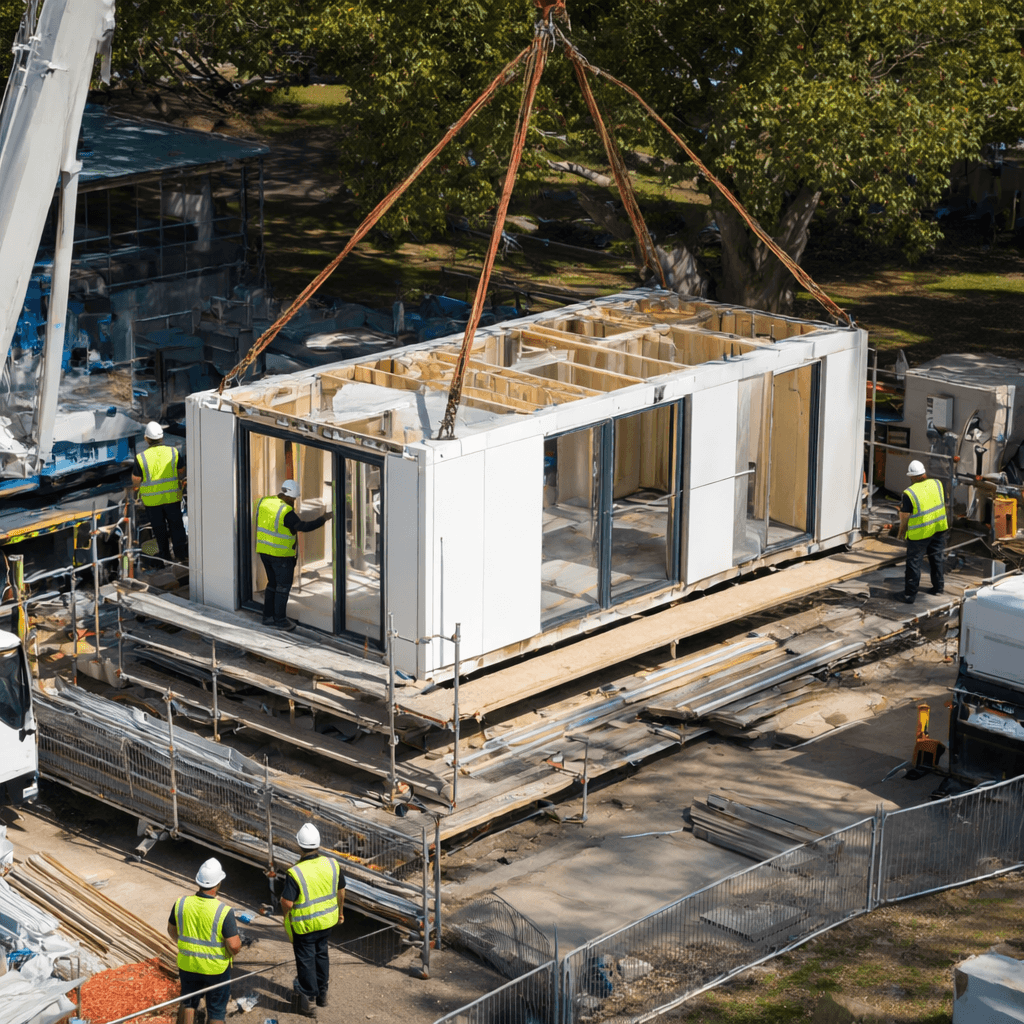
For modular and OSC projects specifically, the ODP isn't just a planning document — it's the clearest signal yet that Vancouver is ready to build differently. Here's what the new framework means, what it unlocks, and where LandMAX sees the biggest opportunities for our clients.
For modular and OSC projects specifically, the ODP isn't just a planning document — it's the clearest signal yet that Vancouver is ready to build differently. Here's what the new framework means, what it unlocks, and where LandMAX sees the biggest opportunities for our clients.
1. What the ODP Does
After decades of operating without a unified land use framework, Vancouver's first Official Development Plan (ODP) is now law. For landowners, developers, and OSC integrators, this isn't just a policy milestone — it's a rezoning roadmap that defines what gets built, where, and at what density across the entire city. The ODP establishes Vancouver's long-term land use vision — mapping where density is directed, what uses are permitted by neighbourhood, and how rezoning applications will be evaluated going forward. Every site in Vancouver now has a policy context it didn't have before, and every rezoning application will be measured against it.
💡 Key point: Every future Vancouver rezoning will now be evaluated against a single citywide land use framework.
2. Why It Matters for Modular
Modular and off-site construction projects benefit directly from the ODP's policy clarity. When density envelopes are defined upfront, manufacturers and OSC integrators can design to known parameters much earlier in the development process — reducing costly redesigns and accelerating factory production timelines by weeks or even months. For social housing and senior living projects specifically, the ODP creates new density permissions in previously restricted neighbourhoods — opening sites that were completely off the table before the plan was adopted. This means more sites are now viable for modular development than at any previous point in Vancouver's planning history.
💡 Key point: Defined density envelopes let modular projects design to known parameters earlier — cutting redesign costs and compressing timelines.
3. What LandMAX Is Watching
Three specific ODP provisions are particularly relevant for our clients:
Residential Infill Zones — Expanded permissions for 6-storey modular typologies on standard 33×122 and 50×122 ft lots, opening a large inventory of underutilized residential sites to density uplift.
Transit-Oriented Areas — Higher density envelopes near SkyTrain stations, where modular stacking is most structurally and logistically efficient, and where the policy environment most strongly supports accelerated approvals.
Non-Market Housing Priority — Streamlined rezoning pathways for projects with confirmed BC Housing or CMHC funding alignment, reducing the timeline and cost of the approval process for non-profit and government-backed developments.
💡 Key point: Three ODP provisions — infill zones, transit-oriented areas, and non-market housing priority — directly expand rezoning options for LandMAX clients.
1. What the ODP Does
After decades of operating without a unified land use framework, Vancouver's first Official Development Plan (ODP) is now law. For landowners, developers, and OSC integrators, this isn't just a policy milestone — it's a rezoning roadmap that defines what gets built, where, and at what density across the entire city. The ODP establishes Vancouver's long-term land use vision — mapping where density is directed, what uses are permitted by neighbourhood, and how rezoning applications will be evaluated going forward. Every site in Vancouver now has a policy context it didn't have before, and every rezoning application will be measured against it.
💡 Key point: Every future Vancouver rezoning will now be evaluated against a single citywide land use framework.
2. Why It Matters for Modular
Modular and off-site construction projects benefit directly from the ODP's policy clarity. When density envelopes are defined upfront, manufacturers and OSC integrators can design to known parameters much earlier in the development process — reducing costly redesigns and accelerating factory production timelines by weeks or even months. For social housing and senior living projects specifically, the ODP creates new density permissions in previously restricted neighbourhoods — opening sites that were completely off the table before the plan was adopted. This means more sites are now viable for modular development than at any previous point in Vancouver's planning history.
💡 Key point: Defined density envelopes let modular projects design to known parameters earlier — cutting redesign costs and compressing timelines.
3. What LandMAX Is Watching
Three specific ODP provisions are particularly relevant for our clients:
Residential Infill Zones — Expanded permissions for 6-storey modular typologies on standard 33×122 and 50×122 ft lots, opening a large inventory of underutilized residential sites to density uplift.
Transit-Oriented Areas — Higher density envelopes near SkyTrain stations, where modular stacking is most structurally and logistically efficient, and where the policy environment most strongly supports accelerated approvals.
Non-Market Housing Priority — Streamlined rezoning pathways for projects with confirmed BC Housing or CMHC funding alignment, reducing the timeline and cost of the approval process for non-profit and government-backed developments.
💡 Key point: Three ODP provisions — infill zones, transit-oriented areas, and non-market housing priority — directly expand rezoning options for LandMAX clients.

Conclusion
Source: City of Vancouver Official Development Plan, 2025

